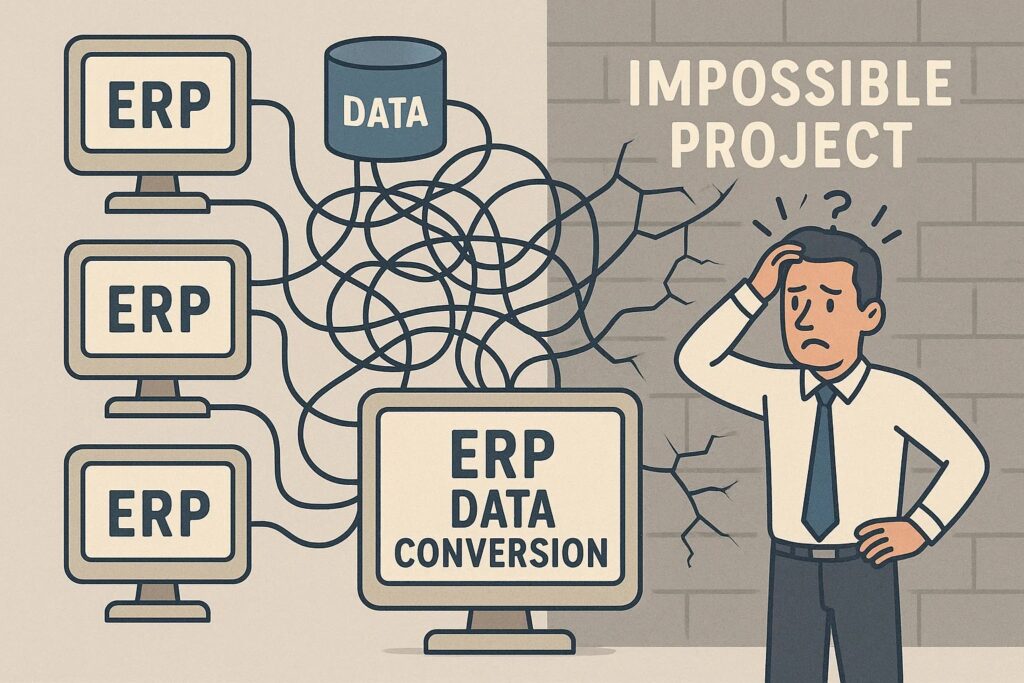
Unifying multiple ERP systems often seems straightforward: one system, one truth. However, ERP data conversions are far from simple technical tasks. They’re massive undertakings plagued by shifting priorities, misunderstood data, and unrealistic timelines, frequently becoming “impossible projects” that defy conventional project management.
Despite these challenges, these projects must succeed. The key isn’t just understanding why they fail, but how to lead them effectively. Here are 10 rules for delivering these inherently difficult projects:
1. Internal readiness review before kick-off
Many ERP data conversions are doomed from the start due to vague assumptions. Insist on clear scope, realistic timelines, and robust change control before anything is kicked off. Include terms for data discovery, mapping workshops, and iterative validation.
2. Define “Done” Explicitly
“Go live” isn’t enough. Clearly define what “delivery” means for your project. Document specific milestones like data accuracy targets, business sign-offs, and successful cutover rehearsals, and get early agreement from all stakeholders.
3. Be Helpful and Committed
Impossible projects create stress. Show up as a partner, not just a manager. Offer to help stakeholder with internal data governance, facilitate workshops, and coach them through each phase.
4. Build Relationships and Influence
Authority alone won’t suffice. Cultivate strong relationships with key stakeholders, including data owners, finance leads, and IT subject matter experts. This trust allows you to navigate difficult conversations about scope and timelines.
5. Focus on Pragmatic Progress
Perfection is a luxury. Prioritize visible progress over flawless execution. Be willing to move forward with “good enough” data quality, planning to address imperfections later. Use trial conversions to build momentum.
6. Exert Pressure
Sometimes, you need to push back. Escalate stalled decisions or slipping timelines firmly but professionally. Use risk logs and steering committee visibility to ensure issues are addressed.
7. Manage Information Flow Consciously
Miscommunication can derail any project. Be deliberate about what information is shared, with whom, and when. Tailor updates for different audiences, maintaining transparency without causing panic.
8. Safeguard Project Finances
ERP migrations are notorious for budget overruns. Track effort against estimates monthly and firmly push back on out-of-scope requests to protect your project’s financial health.
9. Document Project History
Memories fade. Maintain a central decision log and document all change requests, assumptions, and key decisions. This serves as your defense when questions arise later.
10. Prioritize the Long-Term Relationship
Even challenging projects can strengthen stakeholder relationships. Be transparent, professional, and committed. Project team members remember how you navigated the storm.
Navigating the Impossible
ERP data conversions embody the “impossible project” archetype: unclear scope, shifting goals, and high expectations. However, “impossible” doesn’t mean failure. It signifies complexity and risk, demanding strong leadership. By applying these 10 rules, you can navigate the chaos with integrity and intent, transforming a challenging undertaking into a hard-won success.